Process discovery
Document current workflows, pain points, roles, and required outputs.
Odoo & Finance Automation
We combine accounting, tax, process, and Odoo expertise to replace fragmented spreadsheets and manual workflows with clearer, controlled, and scalable finance operations.
The challenge
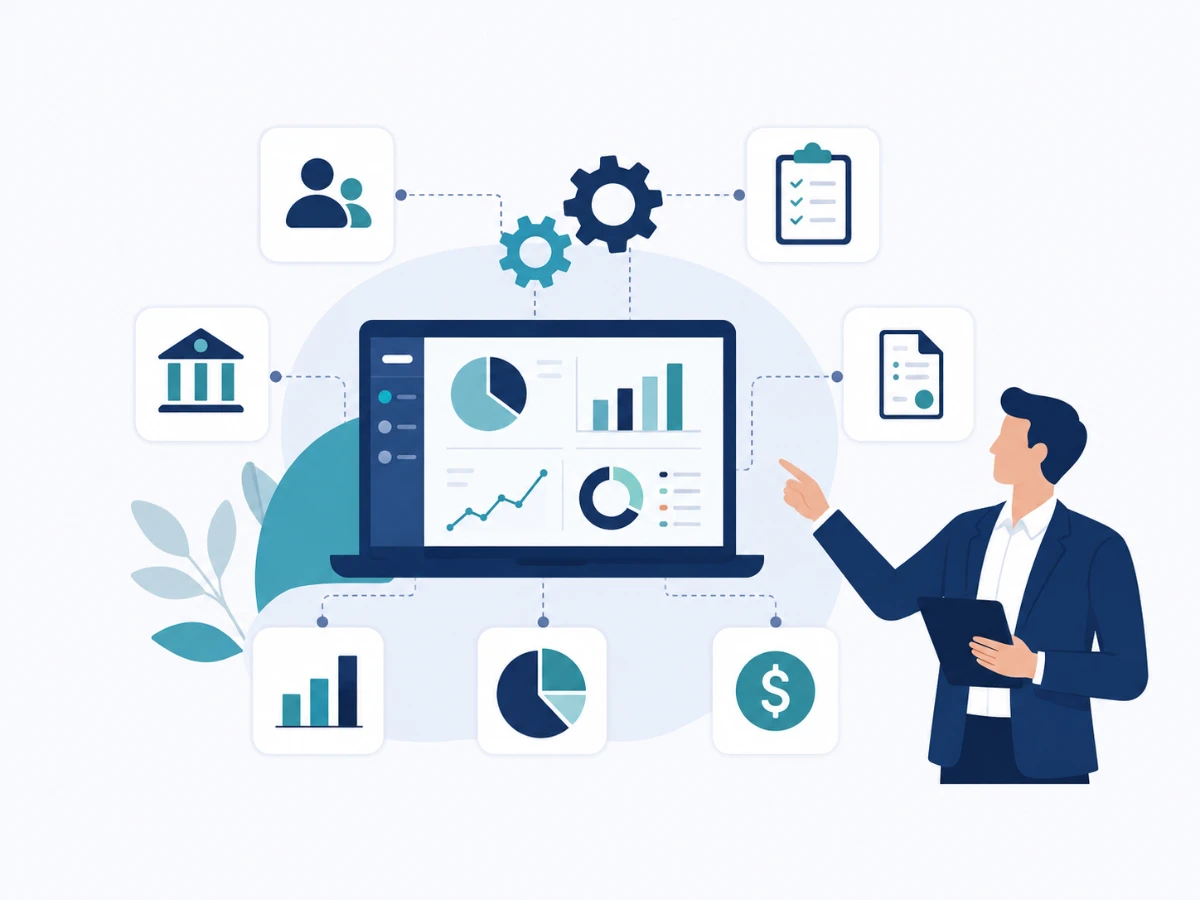
Successful automation requires a clear operating model, reliable data, appropriate controls, and an implementation designed around management information—not only system configuration.
What we deliver
Document current workflows, pain points, roles, and required outputs.
Configure journals, accounts, analytic dimensions, taxes, and reporting foundations.
Design approvals and handoffs for purchasing, expenses, invoicing, and related finance processes.
Organize opening data, mapping requirements, and validation responsibilities.
Prepare scenarios, user guidance, and controlled go-live support.
Review usage, reporting, exceptions, and opportunities after launch.

Business impact
A finance system should help management see what is happening, reduce avoidable manual work, and strengthen accountability across the business.
We work with businesses that have outgrown spreadsheets and disconnected systems and want one platform linking sales, inventory and accounting, producing reporting they can rely on.
Good moments to call: the monthly close takes weeks, inventory balances disagree with the books, data is re-keyed by hand between two systems, or you need reporting the current system simply cannot produce.
Frequently asked questions
No. Our approach starts with finance, accounting, tax, and operating processes, then uses Odoo to support the intended business model.
Yes. We can review current processes, configuration, reporting gaps, and control issues before agreeing an improvement roadmap.
Not necessarily. A phased approach can prioritize the processes that create the greatest operational and financial value.
Not always. We start by assessing what you have: sometimes correcting the accounting setup and connecting existing tools is enough. If a move is genuinely worth it, we phase it, starting with accounting and invoicing before extending to the rest of operations.
It depends on the number of processes and users and the state of your current data. We set a clear schedule at the start and prefer a phased go-live so daily operations never stop.
We migrate opening balances, chart of accounts, customers, suppliers and inventory after cleaning them, and agree with you what moves across and what stays as archive.
Yes. Training is part of the implementation rather than a separate service, followed by support for an agreed period to handle whatever daily use surfaces.
Next step
Discuss your current systems, reporting needs, and priority workflows with Kayan Advisory.